
BSW system limitations
WARNING The limitations of the Blind Spot Warning (BSW) system are described below. Failure to operate the Nissan Murano in accordance with these limitations, or relying on the system as a substitute for careful observation and safe driving practices, could result in a collision, serious injury, or death.
- The BSW system cannot detect every vehicle or object under all driving, traffic, road, and environmental conditions. Always check the mirrors, look over your shoulder, and confirm that the adjacent lane is clear before changing lanes.
- The radar sensors may be unable to detect certain objects or activate the BSW system in situations
involving the following:
- Pedestrians, bicycles, or animals located near the vehicle or within the surrounding traffic area.
- Motorcycles, low-height vehicles, vehicles with high ground clearance, or other vehicles with shapes and profiles that may be difficult for the radar sensors to identify.
- Oncoming vehicles traveling in the opposite direction.
- Vehicles that remain within the detection zone while your Nissan Murano accelerates from a stopped position.
- A vehicle merging into an adjacent lane while traveling at approximately the same speed as your vehicle.
- A vehicle approaching rapidly from behind, particularly when the closing distance changes within a short period.
- A vehicle that your vehicle overtakes rapidly before it remains in the radar detection zone long enough to be recognized.
- A vehicle that passes through the detection zone quickly and does not remain beside the vehicle for an extended period.
- When overtaking several vehicles in succession, vehicles following the first vehicle may not be detected if they are traveling close together with limited spacing between them.
- The radar sensor detection zone is designed around a standard lane width. When driving in a lane that is wider than normal, the radar sensors may not detect a vehicle traveling in the adjacent lane because it may remain outside the effective detection area. In a narrow lane, the sensors may occasionally detect a vehicle traveling two lanes away.
- The radar sensors are designed to disregard most stationary objects. However, guardrails, walls, roadside foliage, parked vehicles, and similar objects may occasionally be detected. This can occur during normal operation and does not necessarily indicate a malfunction of the Nissan Murano BSW system.
- The following conditions may reduce the radar sensors' ability to detect vehicles accurately or may delay
system activation:
- Severe weather, including conditions that significantly reduce visibility or interfere with radar operation.
- Heavy road spray produced by surrounding vehicles or wet roadway surfaces.
- Ice, frost, snow, mud, dirt, or other material building up on the vehicle near the radar sensor areas.
- Do not attach stickers, including transparent films or materials, install accessories, or apply additional paint near the radar sensors. Any obstruction or modification in these areas may interfere with the radar signals and reduce the system's ability to detect vehicles in adjacent lanes.
- Excessive interior or exterior noise, such as a high audio system volume or an open vehicle window, may interfere with your ability to hear the warning chime. Never rely solely on the audible alert when checking surrounding traffic.
BSW driving situations
Basic Information
 Indicator on
 Indicator off
 Indicator flashing
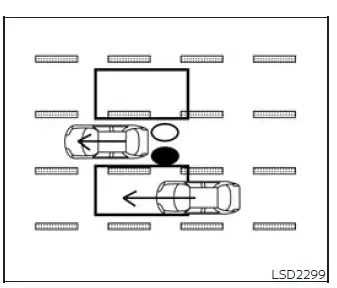
Illustration 1 - Approaching from behind
Another vehicle approaching from behind
Illustration 1 shows a vehicle approaching from behind in an adjacent lane. When that vehicle enters the radar detection zone, the corresponding side BSW/RCTA indicator light illuminates. The illuminated indicator informs the driver that a vehicle has been detected beside or behind the Nissan Murano in the monitored adjacent-lane area.
NOTE:
- The radar sensors may not detect a vehicle approaching rapidly from behind, especially if it enters and passes through the detection zone before the system has sufficient time to identify it and illuminate the indicator.
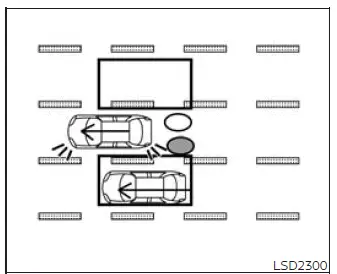
Illustration 2 - Approaching from behind
Illustration 2: If the driver activates the turn signal while another vehicle is already within the detection zone, the Blind Spot Warning system provides an additional alert. The system sounds a chime twice, while the side BSW/RCTA indicator light and the BSW indicator flash to warn that a lane change may place the Nissan Murano in the path of the detected vehicle.
NOTE:
- The radar sensors may not detect a vehicle approaching rapidly from behind, particularly if it enters and moves through the monitored area within a short period.
- If the driver activates the turn signal before another vehicle enters the detection zone, the side BSW/RCTA indicator light and the BSW indicator will flash once that vehicle is detected. However, the warning chime will not sound in this situation because the turn signal was already operating before the vehicle entered the monitored area.
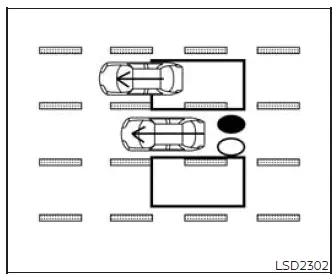
Illustration 3 - Overtaking another vehicle
Overtaking another vehicle
Illustration 3: When the Nissan Murano overtakes another vehicle, the corresponding side BSW/RCTA indicator light illuminates if the overtaken vehicle remains within the radar detection zone for approximately 2 seconds. The illuminated indicator informs the driver that the other vehicle is still positioned within the monitored blind-spot area.
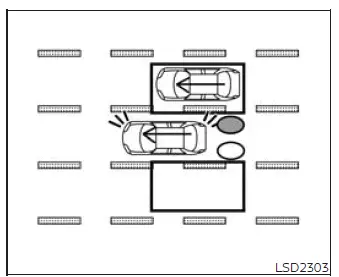
Illustration 4 - Overtaking another vehicle
Illustration 4: If the driver activates the turn signal while the overtaken vehicle remains within the detection zone, the system sounds the warning chime twice. At the same time, the side BSW/RCTA indicator light and the BSW indicator flash, alerting the driver to the presence of a vehicle in the intended lane-change area.
NOTE:
- When overtaking several vehicles in succession, vehicles following the first one may not be detected if they are traveling close together. Limited spacing can make it difficult for the radar sensors to identify each vehicle separately.
- The radar sensors may not detect slower-moving vehicles when they are overtaken quickly because those vehicles may pass through the detection zone before the system can provide a warning.
- If the driver activates the turn signal before a vehicle enters the detection zone, the side BSW/RCTA indicator light and the BSW indicator will flash when the vehicle is detected. However, no warning chime will sound because the turn signal was activated before the vehicle entered the monitored zone.
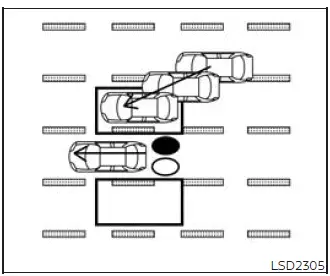
Illustration 5 - Entering from the side
Entering from the side
Illustration 5: The corresponding side BSW/RCTA indicator light illuminates when another vehicle enters the detection zone from either side. This visual warning helps inform the driver that a vehicle is present within the monitored area beside the Nissan Murano.
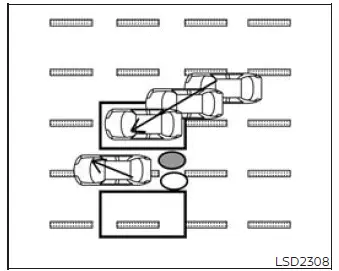
Illustration 6 - Entering from the side
Illustration 6: If the driver activates the turn signal while another vehicle is already within the detection zone, the system sounds the warning chime twice. The side BSW/RCTA indicator light and the BSW indicator also flash, providing both audible and visual notification that a vehicle has been detected in the intended direction of travel.
NOTE:
- If the driver activates the turn signal before another vehicle enters the detection zone, the side BSW/RCTA indicator light and the BSW indicator will flash when that vehicle is detected, but the warning chime will not sound.
- The radar sensors may not detect a vehicle entering the detection zone while traveling at approximately the same speed as your vehicle. Because the relative movement between the vehicles is limited, detection may be delayed or may not occur.
See also:
Fuel recommendation
Hardtop models
Use unleaded regular gasoline with an octane
rating of at least 87 AKI (Anti-Knock Index)
number (Research octane number 91).
CrossCabriolet models
NISSAN recommends the use of u ...
Operating tips
● When the engine coolant temperature and
outside air temperature are low, the air flow
from the foot outlets may not operate for a
maximum of 150 seconds. However, this is
not a malfunction ...
Cleaning exterior
In order to maintain the appearance of your
vehicle, it is important to take proper care of it.
To protect the paint surface, wash your vehicle
as soon as you can:
• after a rainfall to preven ...