
Front passenger air bag and status light
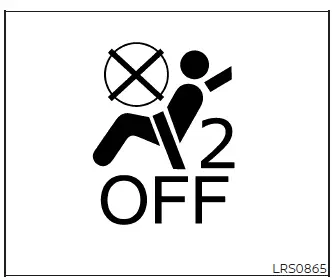
WARNING The front passenger air bag and front passenger supplemental knee air bag are designed to automatically turn OFF under some conditions. Read this section carefully to understand how the system operates, what the status light means, and why the correct use of the front passenger seat is important.
Proper use of the seat, seat belt, and child restraints is necessary for the most effective protection. Failure to follow all instructions in this manual concerning seats, seat belts, child restraints, and passenger seating position can increase the risk or severity of injury in an accident. In the Nissan Murano, the front passenger air bag system must be allowed to evaluate the seat area without interference from incorrect seating, added weight, objects, or improperly positioned restraints.
Status light
The front passenger seat is equipped with an occupant classification sensor (weight sensor) that turns the front passenger air bag and front passenger supplemental knee air bag on or off depending on the weight applied to the front passenger seat. This system helps determine whether the front passenger air bag and supplemental knee air bag should be available for deployment under the conditions detected by the vehicle.
The status of the front passenger air bag and front passenger supplemental knee air bag (ON or OFF) is indicated
by the front passenger air bag status light
 which is located on the instrument panel. This indicator gives the driver and occupants a clear visual reference
for the current operating status of the front passenger air bag system.
which is located on the instrument panel. This indicator gives the driver and occupants a clear visual reference
for the current operating status of the front passenger air bag system.
After the ignition switch is placed in the "ON" position, the front passenger air bag status light on the instrument panel illuminates for about 7 seconds and then turns off or remains illuminated depending on the occupied status of the front passenger seat. This initial illumination is part of the system check, while the final light condition reflects how the system has classified the front passenger seating area.
The light operates as follows:
Condition: Empty front passenger seat
- Passenger Air Bag Status Light
 : ON
(illuminated), indicating that the front passenger air bag system has identified the seat as empty or
without the required occupant condition for activation.
: ON
(illuminated), indicating that the front passenger air bag system has identified the seat as empty or
without the required occupant condition for activation.
- Front Passenger Air Bag and Front Passenger Supplemental Knee Air Bag Status: INHIBITED, meaning the front passenger air bag and front passenger supplemental knee air bag are not set to activate under this seating condition.
Condition: Bag or Child or Child Restraint or Small Adult in front passenger seat
- Passenger Air Bag Status Light
 :
ON
(illuminated) or OFF (dark), depending on how the occupant classification sensor interprets the weight and
position applied to the front passenger seat.
:
ON
(illuminated) or OFF (dark), depending on how the occupant classification sensor interprets the weight and
position applied to the front passenger seat.
- Front Passenger Air Bag and Front Passenger Supplemental Knee Air Bag Status: INHIBITED or ACTIVATED, depending on the specific seating condition, the detected weight, and how the seat belt and front passenger seat are being used. Because small occupants, child restraints, and objects can affect classification, all instructions for proper restraint use must be followed carefully in the Nissan Murano.
Condition: Adult in the front passenger seat
- Passenger Air Bag Status Light
 : OFF
(dark), indicating that the system has classified the front passenger seat as occupied by an adult under
normal seating conditions.
: OFF
(dark), indicating that the system has classified the front passenger seat as occupied by an adult under
normal seating conditions.
- Front Passenger Air Bag and Front Passenger Supplemental Knee Air Bag Status: ACTIVATED, meaning the front passenger air bag and front passenger supplemental knee air bag are available to operate if a collision occurs that meets the required deployment conditions.
In addition to the conditions listed above, certain objects placed on the front passenger seat may also cause the light to operate as described, depending on their weight and how they rest on the seat cushion. Bags, packages, electronic devices, or other items can influence the occupant classification sensor, so the front passenger seat should not be used as a storage area when the status of the air bag system needs to be interpreted correctly.
Front passenger air bag
The front passenger air bag and front passenger supplemental knee air bag are designed to automatically turn OFF when the vehicle is operated under some conditions as described below in accordance with U.S. requirements for this system. In the Nissan Murano, this automatic operation is part of the Advanced Air Bag System and is intended to help match front passenger air bag availability to the seating condition detected at the front passenger seat.
regulations. If the front passenger air bag and front passenger supplemental knee air bag are OFF, they are not designed to inflate in a crash. This automatic ON/OFF function applies to the front passenger air bag system only. The driver air bag and the other air bags installed in your Nissan Murano are separate from this specific occupant classification function.
The purpose of the regulation is to help reduce the risk of injury or death from an inflating air bag to certain front passenger seat occupants, including children, by requiring the front passenger air bag and front passenger supplemental knee air bag to be automatically turned OFF under specific conditions. The system uses designated sensors to help meet these requirements and to evaluate the condition of the front passenger seat before determining whether the air bags should be available for deployment.
The occupant classification sensor in this vehicle is a weight sensor. It is designed to detect an occupant and certain objects on the seat by measuring the weight applied to the front passenger seat cushion. For example,
- If a child is in the front passenger seat, the Advanced Air Bag System is designed to turn the front passenger air bag and front passenger supplemental knee air bag OFF to help reduce the risk associated with air bag deployment.
- If a child in a child restraint of a larger size and weight is in the front passenger seat, the Advanced Air Bag System may turn the passenger air bag ON because the detected weight and seating condition may be interpreted differently by the system.
Front passenger seat adult occupants who are properly seated and using the seat belt as outlined in this manual should not cause the front passenger air bag and front passenger supplemental knee air bag to be automatically turned OFF. For small adults, the air bags may be turned OFF in some cases. If the occupant takes weight off the seat cushion, such as by not sitting upright, sitting on the edge of the seat, leaning away from the seatback, or otherwise riding out of position, the sensor may interpret the seating condition in a way that causes the air bags to turn OFF. Always sit fully back in the seat, remain upright, and wear the seat belt correctly so the seat belt and supplemental air bag system in the Nissan Murano can provide the most effective protection available under the detected conditions.
NISSAN recommends that pre-teens and children be properly restrained in a rear seat. NISSAN also recommends that appropriate child restraints and booster seats be correctly installed in a rear seating position, where children can be secured more appropriately according to their size, age, and the instructions provided with the child restraint or booster seat.
If this is not possible, the occupant classification sensor is designed to operate as described above and may turn the front passenger air bag and front passenger supplemental knee air bag OFF, or ON for a child in a child restraint of a larger size and weight. Because the system response depends on the weight and seating condition detected on the front passenger seat, careful installation and correct passenger positioning are especially important.
Failing to properly secure child restraints and to use the ALR mode (child restraint mode) may allow the restraint to tip, shift, or move out of its intended position. In an accident, this movement can affect how the front passenger seat is classified and may result in the front passenger air bag and front passenger supplemental knee air bag inflating in a crash instead of remaining OFF. Child restraints must always be installed exactly as instructed in this manual and by the restraint manufacturer.
If the front passenger seat is not occupied, the front passenger air bag and front passenger supplemental knee air bag are designed not to inflate in a crash. However, heavy objects placed on the seat could result in air bag inflation because the object's weight may be detected by the occupant classification sensor. Other conditions could also result in air bag inflation, such as a child standing on the seat or two children sitting on the seat, which is contrary to the instructions in this manual. Always make sure that you and all occupants in the Nissan Murano are seated correctly, restrained properly, and not placing objects or body weight on the front passenger seat in a way that could interfere with proper system operation.
Using the front passenger air bag status light, you can monitor when the front passenger air bag and front passenger supplemental knee air bag are automatically turned OFF. This indicator is an important reference for understanding how the Nissan Murano has classified the front passenger seat at that moment, especially after a passenger sits down, changes position, or after a child restraint or object has been placed on the seat.
If an adult occupant is in the seat but the front passenger air bag status light is illuminated, indicating that the front passenger air bag and front passenger supplemental knee air bag are OFF, it may be because the person is a small adult, is not sitting fully and evenly on the seat cushion, or is not using the seat belt correctly. The occupant should sit upright, remain properly positioned against the seatback, keep both feet in a normal seating position, and wear the seat belt as described in this manual so the system can evaluate the seat condition as accurately as possible.
If a child restraint must be used in the front seat, the front passenger air bag status light may or may not be illuminated, depending on the size of the child and the type, weight, and positioning of the child restraint being used. If the front passenger air bag status light is not illuminated, indicating that the front passenger air bag and front passenger supplemental knee air bag might inflate in a crash, it could mean that the child restraint or seat belt is not being used properly, or that the occupant classification sensor is interpreting the seat condition differently than expected. Make sure that the child restraint is installed properly, the seat belt is routed and secured correctly, and the occupant is positioned properly. If the front passenger air bag status light is still not illuminated after checking these items, reposition the occupant or child restraint in a rear seat, where children are generally better protected when properly restrained.
If the front passenger air bag status light will not illuminate even though you believe that the child restraint, the seat belts, and the occupant are properly positioned, it is recommended that you take your Nissan Murano to a NISSAN dealer. A NISSAN dealer can check system status by using a special tool and verify whether the occupant classification system is operating as intended. However, until you have confirmed with a dealer that your air bag system is working properly, reposition the occupant or child restraint in a rear seat.
The NISSAN Advanced Air Bag System and front passenger air bag status light will take a few seconds to register a change in the front passenger seat status. This short delay is normal system operation and does not indicate a malfunction. Avoid judging the final light condition immediately after a passenger moves, the seat belt is fastened, or weight is added to or removed from the front passenger seat.
If a malfunction occurs in the front passenger air bag system, the supplemental air bag warning light
 , located in the meter
and gauges area of the instrument panel, will be illuminated, either blinking or steadily lit. Have the system
checked as soon as practical. It is recommended that you visit a NISSAN dealer for this service so the system
can be inspected using the proper diagnostic procedure.
, located in the meter
and gauges area of the instrument panel, will be illuminated, either blinking or steadily lit. Have the system
checked as soon as practical. It is recommended that you visit a NISSAN dealer for this service so the system
can be inspected using the proper diagnostic procedure.
Normal operation
In order for the occupant classification sensor system to classify the front passenger based on weight, please follow the precautions and steps outlined below. These instructions help keep the front passenger seat area free from extra pressure, interference, or objects that could affect the way the system reads the seat condition.
Precautions
- Make sure that there are no objects weighing over 9 lbs. (4 kg) hanging on the seat or placed in the seatback pocket, because added weight in these areas may influence the front passenger seat classification.
- Make sure that a child restraint or other object is not pressing against the rear of the seatback. Pressure from behind the front passenger seat may affect the way the seat and sensor system respond.
- Make sure that a rear passenger is not pushing or pulling on the back of the front passenger seat. Repeated or constant force from the rear seat area can interfere with proper occupant classification.
- Make sure that the front passenger seat or seatback is not forced back against an object on the seat or floor behind it. The seat should be able to remain in a normal position without pressure from luggage, cargo, or other items in the Nissan Murano cabin.
- Make sure that there is no object placed under the front passenger seat. Items stored under the seat may restrict movement, contact seat components, or interfere with the area needed for proper system operation.
Steps
1. Adjust the seat as described in the "Seats" section of this manual. Sit upright with your back resting against the seatback, your body centered on the seat cushion, and your feet comfortably extended to the floor. This seating position helps the Nissan Murano occupant classification system evaluate the front passenger seat more accurately.
2. Make sure there are no objects on your lap. Bags, electronic devices, clothing bundles, or other items can add weight or change the way weight is distributed on the seat, which may affect classification.
3. Fasten the seat belt as described in the "Seat belts" section of this manual.
The front passenger seat belt buckle status is monitored by the occupant classification system and is used as one of the inputs for determining occupancy status. For that reason, it is highly recommended that the front passenger fasten the seat belt correctly before the vehicle is driven.
4. Remain in this position for 30 seconds, allowing the system enough time to classify the front passenger before the vehicle is put into motion. During this time, avoid shifting forward, leaning to the side, lifting weight off the seat cushion, or placing pressure on the seat from objects or passengers nearby.
5. Ensure proper classification by checking the front passenger air bag status light. The light should be reviewed before driving so the driver can confirm that the system has interpreted the front passenger seat condition as expected.
NOTE: This vehicle's occupant classification sensor system generally keeps the classification locked during driving, so it is important to confirm that the front passenger is properly classified before driving. However, the occupant classification sensor may recalculate the weight of the occupant under some conditions, both while driving and when stopped. Because of this, front passenger seat occupants in the Nissan Murano should continue to sit upright, remain centered on the seat cushion, keep their feet comfortably positioned on the floor, and use the seat belt as outlined above.
Troubleshooting
If you think the front passenger air bag status light is incorrect, review the seating position, seat belt use, and surrounding area before assuming there is a system problem:
1. If the light is ON with an adult occupying the front passenger seat:
- The occupant may be a small adult, in which case the air bag light is functioning as intended. The front
passenger air bag and front passenger supplemental knee air bag are suppressed.
However, if the occupant is not a small adult, the illuminated status light may be caused by one or more of the following conditions interfering with the weight sensors or affecting how weight is applied to the seat:
- The occupant is not sitting upright, is not leaning against the seatback, is not centered on the seat cushion, or does not have his/her feet comfortably extended to the floor. An out-of-position passenger may shift weight away from the seat cushion and change the system reading.
- A child restraint or other object is pressing against the rear of the seatback, adding pressure that may influence how the front passenger seat is classified.
- A rear passenger is pushing or pulling on the back of the front passenger seat, which can apply force to the seatback and interfere with normal sensor operation.
- The front seat or seatback is being forced against an object on the seat or floor behind it. Luggage, cargo, or loose items behind the seat should be moved so the seat can remain in a normal position.
- An object is placed under the front passenger seat. Items stored under the seat may contact seat components or restrict normal seat movement.
- An object is placed between the seat cushion and center console or between the seat cushion and the door. Objects wedged in these areas can apply unintended pressure to the seat cushion or seat frame and may affect the Nissan Murano front passenger classification system.
If the vehicle is moving, come to a complete stop as soon as it is safe to do so. Check the seating position, seat belt use, and any objects or pressure sources described above, then correct anything that may be affecting the front passenger seat classification. After making the correction, restart the Nissan Murano and wait 1 minute so the system has time to complete its evaluation.
NOTE: A system check will be performed during which the front passenger air bag status light will remain lit for about 7 seconds initially. This brief illumination is part of the normal checking process before the system settles into the status determined for the front passenger seat.
If the light is still ON after this, the person should be advised not to ride in the front passenger seat until the condition has been checked. The vehicle should be inspected as soon as possible. It is recommended that you visit a NISSAN dealer for this service, because the front passenger air bag status and occupant classification system should be diagnosed using the proper service procedure.
2. If the light is OFF with a small adult, child or child restraint occupying the front passenger seat.
This may be due to one or more of the following conditions interfering with the weight sensors, changing how weight is applied to the seat cushion, or preventing the system from classifying the front passenger seat as expected:
- The small adult or child is not sitting upright, leaning against the seatback, and centered on the seat cushion with his/her feet comfortably extended to the floor. Sitting on the edge of the seat, leaning forward, or shifting weight away from the cushion may affect sensor readings.
- The child restraint is not properly installed as outlined in the "Child restraints" section of this manual. An incorrectly positioned restraint can change the way weight and pressure are applied to the front passenger seat.
- An object weighing over 9 lbs. (4 kg) is hanging on the seat or placed in the seatback pocket. Extra weight in these areas may influence the occupant classification system in the Nissan Murano.
- A child restraint or other object is pressing against the rear of the seatback, applying force that can interfere with proper front passenger seat classification.
- A rear passenger is pushing or pulling on the back of the front passenger seat, which can place unwanted pressure on the seatback and affect how the system evaluates the seat.
- The front seat or seatback is being forced against an object on the seat or floor behind it. Cargo, bags, or loose items behind the seat should be moved so the seat can remain in a normal, unrestricted position.
- An object is placed under the front passenger seat. Items stored under the seat may contact seat components, restrict movement, or interfere with the area needed for proper system operation.
- An object is placed between the seat cushion and center console. Anything wedged in this area can apply pressure to the seat cushion or seat frame and may affect the Nissan Murano front passenger air bag status light.
If the vehicle is moving, come to a complete stop when it is safe to do so. Check and correct any of the conditions listed above, including passenger posture, child restraint installation, seatback pressure, and objects around or under the front passenger seat. Restart the vehicle and wait 1 minute before checking the status light again.
NOTE:
A system check will be performed during which the front passenger air bag status light will remain lit for about 7 seconds initially. After this check, the light condition should reflect the system's classification of the front passenger seat.
If the light is still OFF after this, the small adult, child or child restraint should be repositioned in the rear seat. The vehicle should then be checked as soon as possible. It is recommended that you visit a NISSAN dealer for this service, because continued operation with an unexpected front passenger air bag status may indicate that the occupant classification system needs inspection.
3. If the light is OFF with no front passenger and no objects on the front passenger seat, the vehicle should be checked. It is recommended that you visit a NISSAN dealer as soon as possible so the front passenger air bag status light and occupant classification system in the Nissan Murano can be properly inspected.
See also:
Anti-lock Braking System (ABS)
WARNING
● The Anti-lock Braking System (ABS) is a
sophisticated device, but it cannot prevent
accidents resulting from careless
or dangerous driving techniques. It can
help maintain vehicle ...
Break-in schedule
During the first 1,200 miles (2,000 km), follow these recommendations to obtain
maximum engine performance and ensure the future reliability and economy of your
new vehicle. Failure to follow th ...
Starting the engine
1. Apply the parking brake.
2. Move the shift lever to the P (Park) or N
(Neutral) position. (P is recommended.)
The starter is designed not to operate unless
the shift lever is in either of the a ...