
I-BSI system limitations
WARNING The limitations of the Intelligent Blind Spot Intervention (I-BSI) system are described below. Failure to operate the Nissan Murano in accordance with these limitations, or relying on the system instead of using safe driving practices, could result in a collision, serious injury, or death.
- The I-BSI system cannot detect every vehicle, object, or hazardous situation under all road, traffic, weather, and driving conditions. Always remain attentive and confirm that the intended path is clear before changing lanes.
- The radar sensors may be unable to detect certain road users or vehicles, and the I-BSI system may not
activate when the following objects or situations are present:
- Pedestrians, bicycles, or animals located beside or near the vehicle.
- Motorcycles, low-height vehicles, vehicles with high ground clearance, or other vehicles whose size or profile may be difficult for the radar sensors to identify.
- Vehicles that remain within the detection zone while the Nissan Murano accelerates from a stopped position.
- Oncoming vehicles traveling in the opposite direction.
- A vehicle merging into an adjacent lane while traveling at approximately the same speed as your vehicle.
- A vehicle approaching rapidly from behind and entering the monitored area within a short period.
- A vehicle that your vehicle overtakes rapidly before it remains in the detection zone long enough to be reliably identified.
- A vehicle that passes through the radar detection zone quickly.
- The radar sensor detection zones are designed around a standard lane width. When driving in a lane that is wider than normal, the sensors may not detect a vehicle traveling in the adjacent lane because it may remain outside the monitored area. When driving in a narrow lane, the sensors may occasionally detect a vehicle traveling two lanes away.
- The radar sensors are designed to disregard most stationary objects. However, guardrails, walls, roadside foliage, parked vehicles, and similar objects may occasionally be detected. This can occur during normal system operation and does not necessarily indicate a malfunction.
- The following environmental or surface conditions may reduce the radar sensors' ability to detect other
vehicles accurately:
- Severe weather that interferes with radar performance or reduces visibility.
- Heavy road spray produced by wet surfaces or surrounding vehicles.
- Ice, frost, snow, mud, or dirt accumulating on the vehicle near the radar sensor areas.
- Do not attach stickers, including transparent films or materials, install accessories, or apply additional paint near the radar sensors. Any obstruction or modification in these areas may interfere with radar signals and reduce the system's ability to detect vehicles beside the Nissan Murano.
- The lane camera may be unable to recognize lane markers in the following situations, causing the I-BSI
system to operate late, incorrectly, or not at all:
- On roads with multiple parallel lane markings; faded, unclear, yellow-painted, or nonstandard lane markings; or lane markings covered by water, dirt, snow, or other material.
- On roads where discontinued or previously used lane markings remain visible and may be mistaken for the current lane boundaries.
- On roads with sharp curves where the lane markings move rapidly through the camera's field of view.
- On roads containing strongly contrasting surfaces or objects, including shadows, snow, standing water, wheel ruts, pavement seams, or lines left after road repairs.
- On roads where the current lane merges with another lane or separates into multiple lanes.
- When the vehicle's direction of travel does not align with the visible lane markers.
- When driving too close to the vehicle ahead, preventing the lane camera from clearly viewing the road markings.
- When rain, snow, dirt, or another substance adheres to the windshield in front of the lane camera unit and obstructs its view.
- When the headlights do not provide sufficient illumination because the lenses are dirty or the headlight aim is not adjusted correctly.
- When strong light shines directly into the lane camera, such as sunlight striking the front of the vehicle during sunrise or sunset.
- When the surrounding brightness changes suddenly, such as when the vehicle enters or exits a tunnel, passes beneath a bridge, or moves between strongly lit and shaded areas.
- Do not rely on the I-BSI system under the following conditions because the warning and steering
assistance functions may not operate properly or may respond unexpectedly:
- During adverse weather, including rain, fog, snow, or similar conditions that reduce visibility or affect sensor performance.
- When driving on slippery surfaces covered with ice, snow, water, or other material that reduces tire grip.
- When traveling on winding, rough, or uneven roads where stable lane positioning may be difficult.
- When a normal lane is closed or redirected because of road construction or repairs.
- When driving through a temporary, improvised, or makeshift traffic lane.
- When traveling on a road where the lane is too narrow for the system to monitor the vehicle's position reliably.
- When one or more tires are not in normal operating condition, including excessive tire wear, low tire pressure, installation of a spare tire, use of tire chains, or installation of nonstandard wheels.
- When the vehicle is equipped with non-original brake or suspension components that may affect its normal steering or handling response.
- Excessive surrounding noise, including a high audio system volume or an open window, may make the warning chime difficult or impossible to hear. The driver must continue monitoring the mirrors, lane position, and surrounding traffic rather than relying only on the audible warning.
I-BSI driving situations
Basic information
 Indicator on
 Indicator off
 Indicator flashing
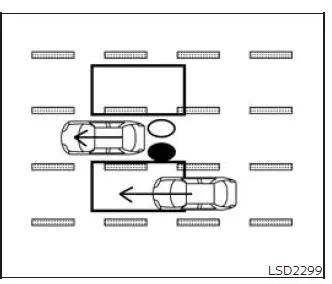
Illustration 1 - Approaching from behind
Another vehicle approaching from behind
Illustration 1: The corresponding side BSW/RCTA indicator light illuminates when another vehicle approaches from behind and enters the radar detection zone in an adjacent lane. The illuminated indicator alerts the driver that a vehicle is present within the monitored blind-spot area beside or behind the Nissan Murano.
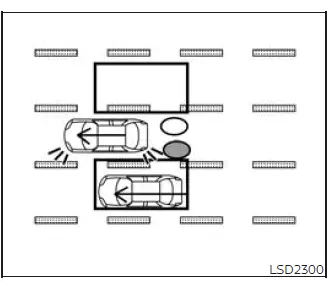
Illustration 2 - Approaching from behind
Illustration 2: If the driver activates the turn signal toward the side where another vehicle has been detected, the system sounds a warning chime twice. At the same time, the corresponding side BSW/RCTA indicator light and the BSW indicator flash to warn that the intended lane-change area is occupied.
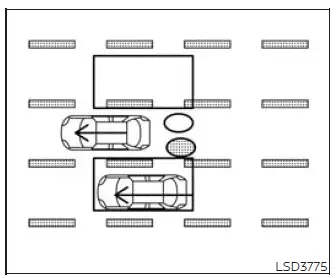
Illustration 3 - Approaching from behind
Illustration 3: If the I-BSI system is switched on and the Nissan Murano approaches a lane marker while another vehicle remains within the corresponding detection zone, the system sounds the warning chime three times. The side BSW/RCTA indicator light and the BSW indicator also flash. The I-BSI system then provides brief steering assistance to help guide the vehicle back toward the center of its current driving lane.
NOTE:
- The radar sensors may not detect a vehicle approaching rapidly from behind, especially when it enters and passes through the monitored area within a short period.
- If the driver activates the turn signal before another vehicle enters the detection zone, the side BSW/RCTA indicator light and the BSW indicator will flash when that vehicle is detected. However, the warning chime will not sound because the turn signal was already operating before the vehicle entered the monitored area.
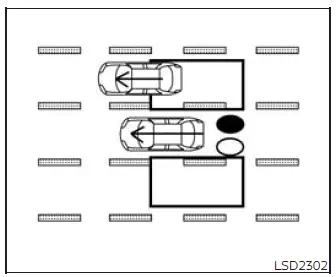
Illustration 4- Overtaking another vehicle
Overtaking another vehicle
Illustration 4: When the Nissan Murano overtakes another vehicle, the corresponding side BSW/RCTA indicator light illuminates if the overtaken vehicle remains within the radar detection zone for approximately 3 seconds. The visual warning remains relevant while the other vehicle continues traveling within the monitored blind-spot area.
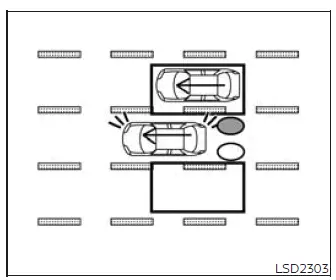
Illustration 5- Overtaking another vehicle
Illustration 5: If the driver activates the turn signal while the overtaken vehicle is still within the detection zone, the system sounds the warning chime twice. The corresponding side BSW/RCTA indicator light and the BSW indicator flash simultaneously, alerting the driver that another vehicle remains in the intended lane-change area.
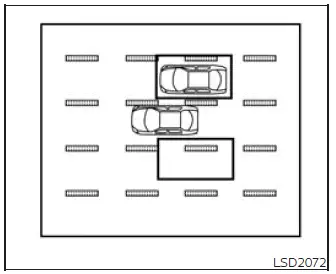
Illustration 6- Overtaking another vehicle
Illustration 6: If the I-BSI system is on and the vehicle approaches a lane marker while the overtaken vehicle remains within the detection zone, the system sounds the warning chime three times. The side BSW/RCTA indicator light and the BSW indicator flash to identify the potential lane-change hazard. The I-BSI system then applies brief steering assistance to help return the vehicle toward the center of the current driving lane.
NOTE:
- When overtaking several vehicles in succession, vehicles following the first one may not be detected if they are traveling close together. Limited spacing between the vehicles can make it difficult for the radar sensors to identify each one separately.
- The radar sensors may not detect a slower-moving vehicle when the Nissan Murano passes it quickly because the other vehicle may remain within the monitored detection zone for only a brief period.
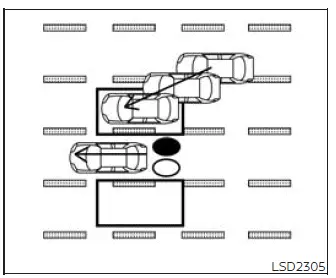
Illustration 7- Entering from the side
Entering from the side
Illustration 7: The corresponding side BSW/RCTA indicator light illuminates when another vehicle enters the radar detection zone from either side. The illuminated indicator informs the driver that a vehicle has been detected within the monitored blind-spot area.
NOTE: The radar sensors may not detect a vehicle that enters the detection zone while traveling at approximately the same speed as your vehicle. With little difference in speed between the two vehicles, radar detection may be delayed or may not occur.
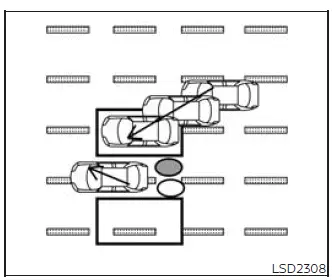
Illustration 8- Entering from the side
Illustration 8: If the driver activates the turn signal toward the side where another vehicle is already within the detection zone, the corresponding side BSW/RCTA indicator light and the BSW indicator flash. The system also sounds the warning chime twice to alert the driver that the intended lane-change area is occupied.
NOTE: If the driver activates the turn signal before another vehicle enters the detection zone, the side BSW/RCTA indicator light will flash when the vehicle is detected, but the warning chime will not sound because the turn signal was already operating before detection occurred.
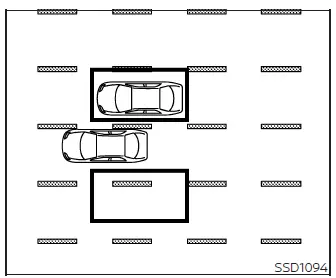
Illustration 9- Entering from the side
Illustration 9: If the I-BSI system is switched on and the Nissan Murano approaches a lane marker while another vehicle remains within the corresponding detection zone, the system sounds the warning chime three times. The side BSW/RCTA indicator light and the BSW indicator flash at the same time. The I-BSI system then provides brief steering assistance to help guide the vehicle back toward the center of its current driving lane.
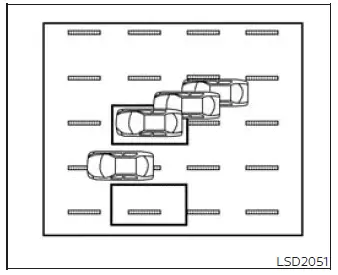
Illustration 10: - Entering from the side
Illustration 10: The I-BSI system will not provide steering assistance if the Nissan Murano is already on a lane marker when another vehicle enters the radar detection zone. Under this condition, only the BSW system operates and provides its applicable warning.
NOTE:
- The radar sensors may not detect a vehicle entering the detection zone while traveling at approximately the same speed as your vehicle because there may be insufficient relative movement for reliable detection.
- The I-BSI system will not provide steering assistance, or active assistance will stop, and only a
warning chime will sound under the following conditions:
- When the driver depresses the brake pedal.
- When the vehicle is accelerated while the I-BSI system is operating.
- When the driver makes a rapid steering input.
- When a warning from the ICC, I-FCW, or AEB with Pedestrian Detection system sounds.
- When the hazard warning flashers are operating.
- When the vehicle is traveling through a curve at high speed.
See also:
Tire dressings
NISSAN does not recommend the use of tire
dressings. Tire manufacturers apply a coating to
the tires to help reduce discoloration of the rubber.
If a tire dressing is applied to the tires, it may ...
Regulatory Information
FCC Regulatory information
– CAUTION: To maintain compliance with
FCC’s RF exposure guidelines, use only the
supplied antenna. Unauthorized antenna,
modification, or attachments could damage
...
CD care and cleaning
● Handle a CD by its edges. Do not bend the
disc. Never touch the surface of the disc.
● Always place the discs in the storage case
when they are not being used.
● To clean a d ...