
Changing engine oil
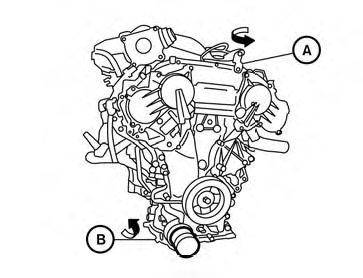
1. Park the vehicle on a level surface and apply
the parking brake.
2. Start the engine and let it idle until it reaches
operating temperature, then turn it off.
3. Remove the oil filler cap A by turning it
counterclockwise.
4. Place a large drain pan under the drain plug
B .
5. Remove the drain plug B with a wrench by
turning it counterclockwise and completely
drain the oil.
If the oil filter is to be changed, remove and replace it at this time. See “Changing engine oil filter” in this section.
● Waste oil must be disposed of properly.
● Check your local regulations.
WARNING
● Prolonged and repeated contact with
used engine oil may cause skin cancer.
● Try to avoid direct skin contact with
used oil. If skin contact is made, wash
thoroughly with soap or hand cleaner
as soon as possible.
● Keep used engine oil out of reach of
children.
CAUTION
Be careful not to burn yourself. The engine oil may be hot.
6. Clean and reinstall the drain plug and a new washer. Securely tighten the drain plug with a wrench. Do not use excessive force.
Drain plug tightening torque:
22 - 29 ft-lb (29 - 39 N·m)
7. Refill engine with recommended oil through the oil filler opening, then install the oil filler cap securely.
See “Capacities and recommended fuel/lubricants” in the “Technical and consumer information” section of this manual for drain and refill capacity.
The drain and refill capacity depends on the oil temperature and drain time. Use these specifications for reference only. Always use the dipstick to determine when the proper amount of oil is in the engine.
8. Start the engine. Check for leakage around
the drain plug and oil filter. Correct as required.
9. Turn the engine off and wait more than
10 minutes. Check the oil level with the
dipstick. Add engine oil if necessary.
See also:
Repairing flat tire (CrossCabriolet models)
WARNING
• After using Emergency Tire Sealant
to repair a minor tire puncture, do
not drive the vehicle at speeds
faster than 50 MPH (80 km/h).
• Immediately after using the Emergency
Tire Se ...
Basic Information. LDW system operation
Basic Information
WARNING Failure to follow the warnings and operating instructions for the Lane Departure
Warning system could result in loss of vehicle control, serious injury, or death.
...
Brake system
Braking precautions
The brake system has two separate hydraulic circuits. If one circuit malfunctions,
you will still have braking at two wheels.
You may feel a small click and hear a sound when t ...