
Flexible seating
Basic Information
WARNING
- Never allow anyone to ride in the cargo area or on the rear seats when they are folded down.
In a collision, people riding in these areas without proper seats and restraints are much more likely to be seriously injured or killed.
- Do not allow passengers to ride in any area of the vehicle that is not equipped with a proper seat and
seat belt.
Make sure every person in the Nissan Murano is seated correctly and using a seat belt before the vehicle moves.
- Do not allow more than one person to use the same seat belt. Each occupant must have a separate seating position and restraint.
- Do not fold down the rear seats when occupants are in the rear seat area or when luggage or loose objects
are resting on the rear seats.
- Make sure the seat path is clear before moving the seatback or releasing the folding mechanism.
- Keep hands, feet, and other body parts away from hinges, latches, and moving seat sections to avoid being caught or pinched.
- Head restraints/headrests should be adjusted properly because they may provide significant protection against injury in an accident. If they have been removed for any reason, always reinstall and adjust them correctly before the seating position is used.
- If the head restraints/headrests are removed for any reason, store them securely so they cannot move around the cabin, injure passengers, or damage the vehicle during sudden braking or an accident.
- When returning the rear row seatbacks to the upright position, always verify that each seatback is locked securely by gently rocking it before allowing passengers to sit in the rear seats. If a seatback is not fully latched, passengers may be injured during sudden braking or a collision.
- Properly secure all cargo to help prevent it from sliding, tipping, or shifting. Do not stack cargo
higher than the seatbacks.
In a sudden stop or collision, unsecured cargo can move forward and cause personal injury.
Folding the rear bench seat
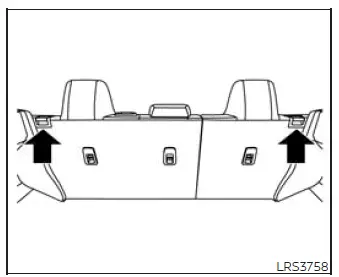
Rear seat
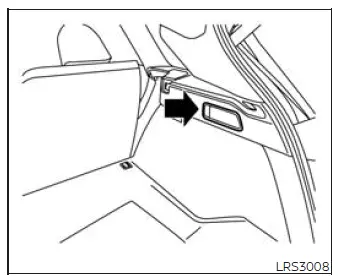
Cargo area
To fold the rear bench seat flat for maximum cargo hauling, clear the rear seating area first and operate the seat carefully so the belts, trim, and seatbacks do not bind.
1. Remove any objects from the rear seat sitting area, including small items that could fall into the seatback gap or interfere with the folding motion.
2. Stow the rear seat belts in the seat belt hooks located on the sides of the vehicle. This helps keep the belts out of the seatback path and reduces the chance of twisting or locking them during folding.
3. Pull up on the latch located on the outside corner of each seatback, or pull the lever on either side of the cargo area. The rear bench section should begin to fold forward when the latch or lever is operated correctly.
NOTE: When using the cargo lever, pull and hold the lever open until the seat is completely folded. Releasing the lever too early may cause the seat belt to lock.
4. To return the rear bench seats to a seating position, raise the seatback and push it firmly until it latches in place. After it locks, gently rock the seatback to confirm that it is secure before passengers use the seat.
NOTE: If one of the rear seatbacks does not fold flat completely, move the corresponding front seat forward to provide the clearance needed for the seatback to lower fully.
WARNING Head restraints/headrests should be adjusted properly because they may provide significant protection against injury in an accident. Always replace and adjust them properly if they have been removed for any reason, especially before the rear seats are returned to passenger use.
See also:
RearView Monitor system limitations
WARNING
The limitations of the RearView Monitor are described below. Failure to understand these restrictions or to
operate the vehicle accordingly could result in a collision, serious injury, o ...
Instrument panel
1. Side ventilator
2. Meters and gauges
3. Push-button ignition switch
4. Center ventilator
5. Center display
— Center color display
— Navigation system
6. Heater/air conditioner control& ...
Programming HomeLink® for Canadian customers and
gate openers
Canadian radio-frequency laws require transmitter
signals to “time-out” (or quit) after several
seconds of transmission – which may not be
long enough for HomeLink® to pick up the signal
du ...